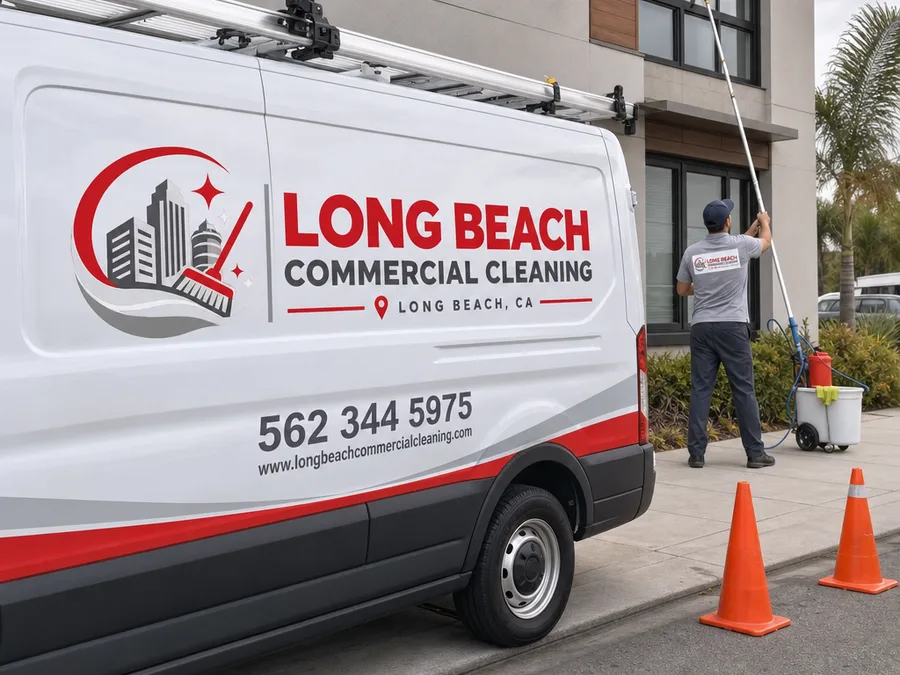
A crew member cleans exterior upper-story windows with extension tools beside a controlled sidewalk work area

Industrial Cleaning · Long Beach

Industrial Cleaning Long Beach

Industrial spaces need cleaning plans that account for equipment movement, dust, traffic lanes, and restricted areas. Build the work around site conditions, access controls, and operating windows.

✓Dust control around operations ✓Loading-area cleaning plans ✓Restricted work-zone coordination ✓Equipment and traffic scheduling

SITE-AWARE CLEANING

Industrial cleaning built around operations

Industrial cleaning begins with the way a site moves: deliveries, equipment, people, materials, and waste all affect where work can happen safely. A productive plan does not treat a warehouse or operational facility like a standard office after closing.

The industrial service scope addresses industrial work around access routes, floor conditions, dust sources, shared restrooms, break areas, and the timing of production or tenant activity. The goal is a clear sequence that supports the facility instead of competing with it.

Some sites need recurring cleaning in support rooms and common areas, while others need a detailed project for accumulated dust or soil. Separating those needs prevents a recurring checklist from carrying work that requires different labor, tools, or site coordination.

A walkthrough also establishes boundaries for restricted zones, staging, disposal, and communication. That preparation helps managers compare proposals on the actual conditions of their facility, not on a generic square-foot estimate that omits the work drivers.

Request a Callback

WORK AREAS AND CONDITIONS

Industrial cleaning scopes by site need

Operational facilities vary widely, so the scope is built around specific spaces and restrictions. We document the areas included, access windows, visible conditions, and any coordination needed before work begins.

Warehouse floor traffic zones

Traffic lanes, entrances, and work paths can collect tracked-in grit, dust, and marks that affect appearance and cleanup time. The scope distinguishes routine removal of loose soil from machine work or treatment that requires a separate floor-care plan.

Production-adjacent shared common areas

Breakrooms, restrooms, offices, and employee entrances often need recurring attention even when production areas have restricted access. Defining them as their own zone keeps everyday cleaning moving without interfering with equipment or active work.

Loading and receiving areas

Dock doors, entry thresholds, and staging edges gather debris as materials move through the site. A walkthrough identifies which portions are safely accessible, when vehicles are clear, and how collected material should be handled under your facility rules.

High dusting and surfaces

Beams, ledges, vents, shelving exteriors, and other elevated surfaces may require periodic attention when dust accumulates. The written scope identifies reachable areas and access limits instead of assuming all overhead work belongs in a standard recurring visit.

Facility restrooms and breakrooms

Employee support spaces are cleaned to the schedule their use requires. Fixtures, sinks, dispensers, tables, and floors are handled as an operational support task, with access and supply procedures documented before service begins.

Request a Callback

COORDINATED FACILITY SERVICES

Where industrial cleaning meets other services

Industrial Cleaning focuses on the operational realities of warehouses, production-adjacent spaces, loading activity, and restricted work areas. A Janitorial Services program can maintain the everyday restrooms, breakrooms, offices, and waste stations within the same facility.

Floor Care Services becomes relevant when traffic lanes or hard surfaces need machine cleaning beyond loose debris removal and routine mopping. The separate scope lets the plan account for the surface, the soil, cure time, and when equipment can be out of service.

Deep Cleaning Services fits detailed resets in common areas, high-touch rooms, and overlooked edges when a site has accumulated buildup. It is useful before a recurring schedule starts or when operations change, but it is not a substitute for a site-aware industrial plan.

A separate scope covers the cleanup that follows building work, renovation, or tenant improvements, which is where Post-Construction Cleaning applies. Once construction dust and trade debris are cleared, ongoing Industrial Cleaning can take over for the operational spaces that remain in regular use.

Request a Callback

Within a professional commercial facility, a cleaner sanitizes a restroom

PLANNED AROUND THE SITE

Our industrial cleaning planning process

Before pricing or scheduling, we need to understand how the site functions. The process records operational windows, access restrictions, safety expectations, and the condition of each included area.

Request a Callback
01

Review site activity

We walk the facility with attention to vehicle movement, active work, delivery patterns, employee routes, and areas that cannot be entered during operation. That review establishes the workable cleaning windows rather than guessing from square footage alone.

02

Identify included zones

Each space is categorized by its use and cleaning requirement, from offices and restrooms to loading edges and accessible elevated surfaces. Restricted production areas are documented separately so the written scope does not create an unsafe expectation.

03

Plan access and staging

Equipment, supplies, disposal, parking, and entry procedures are agreed before the crew arrives. The plan also identifies where signs or work controls are needed, particularly near traffic lanes, sidewalks, docks, or shared building routes.

04

Schedule the right work

Recurring support cleaning and project-based detail work are scheduled differently. We place tasks around shutdowns, low-traffic periods, or agreed access windows so the work can be completed without creating conflict with operations.

05

Confirm work against scope

After the service, the completed areas and any access limits are compared with the written scope. If conditions change, such as a new traffic route or restricted zone, the plan is revised before the next scheduled work.

PROJECT-SPECIFIC PRICING

Budgeting for industrial cleaning work

Published commercial pricing for larger facilities or higher-frequency service commonly runs about $1,200 to $4,500+ per month, depending on scope. That range provides context for recurring support work, but industrial sites have conditions that do not translate cleanly to a standard monthly unit.

Industrial cleaning is quoted per project after a walkthrough because access, active operations, dust levels, traffic controls, floor conditions, and restricted zones change the labor required. The final price follows a written scope that states exactly which areas and work windows are included.

Request a Callback

INDUSTRIAL CLEANING FAQs

Questions about cleaning active facilities

Site conditions drive the answers below. The walkthrough confirms what can be accessed, when work can occur, and how the crew coordinates with your operating procedures.

What types of industrial spaces can be included?+

Industrial cleaning can be scoped for warehouses, production-adjacent areas, loading zones, offices, breakrooms, restrooms, and other commercial support spaces. The key is identifying each zone's use and restrictions. We confirm accessible areas during the walkthrough instead of assuming an entire facility can be cleaned the same way.

How do you work around active operations?+

The plan is built around your operating windows, delivery schedules, vehicle movement, and restricted zones. Work may be placed during low-traffic periods or separated into phases. Access rules, staging locations, and points of contact are recorded ahead of time so the crew is not making operational decisions on arrival.

Is high dusting part of industrial cleaning?+

Accessible high dusting can be included when the walkthrough identifies the surfaces, reach requirements, and safe access conditions. Elevated beams, ledges, vents, and shelving exteriors are not assumed to be routine tasks. Their frequency and method are listed separately when they belong in the scope.

Can recurring cleaning cover warehouse restrooms and offices?+

Yes, recurring service can maintain employee restrooms, break areas, offices, and other support rooms within an industrial facility. Those spaces are usually easier to schedule than active operational zones. The written plan separates them so daily-use areas receive consistent care without disrupting the production side of the building.

How are loading areas handled?+

Loading and receiving areas are reviewed for vehicle timing, pedestrian paths, debris sources, and disposal requirements. Cleaning is scheduled when the area can be accessed safely. The scope names the specific thresholds, dock edges, or accessible paths included so there is no uncertainty around active equipment zones.

When should industrial work be a separate project?+

A separate project makes sense when buildup, heavy dust, floor conditions, or access planning exceed normal recurring tasks. It can also be the right choice before a maintenance program begins. The walkthrough distinguishes a one-time reset from the ongoing work needed to keep the facility in usable condition.

PLAN AROUND OPERATIONS

Get an industrial cleaning scope built for your site

Share your operating hours, accessible areas, and the conditions you need addressed. Our team prepares a written project scope after a walkthrough.

Request a quote

Tell us about your facility

Send the building type, the rooms involved, and your access window. We reply with a written scope and the price.