
Storefront approaches
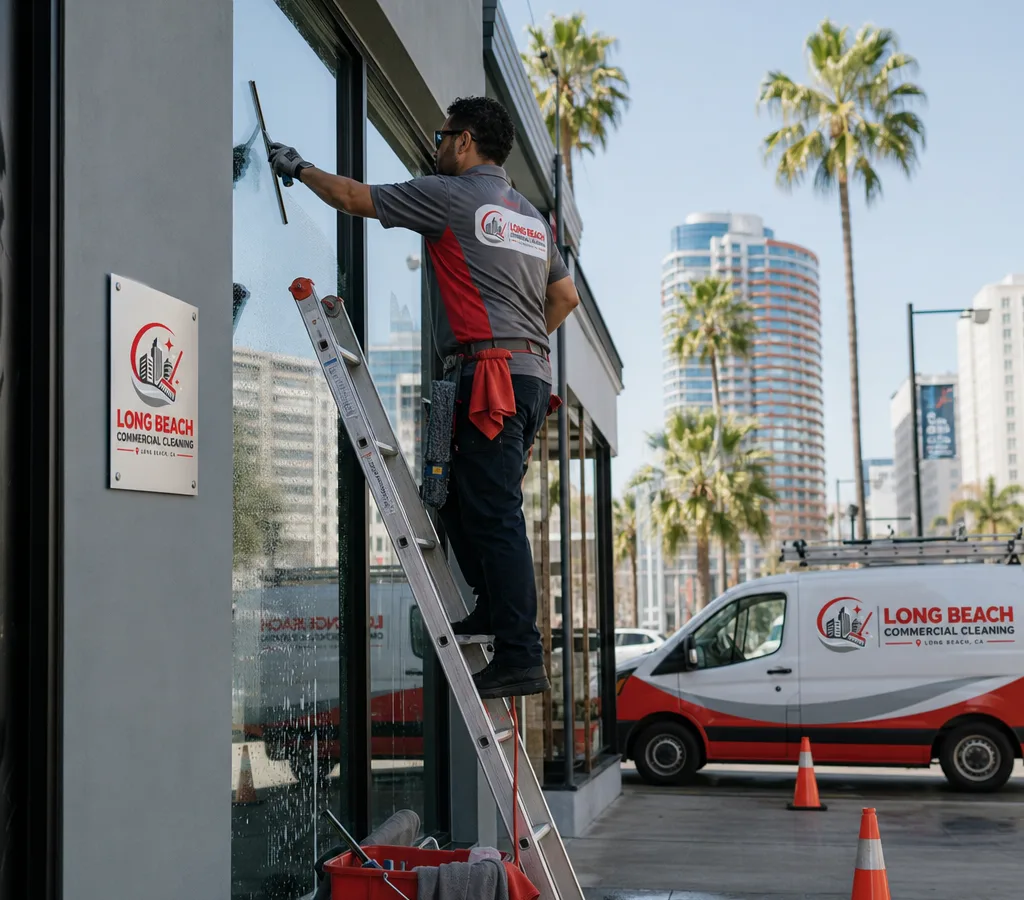
Door glass, handles, entry paths, and accessible exterior-adjacent areas can be mapped into the schedule. The plan focuses on the customer route and the conditions that change most visibly.
Serving Long Beach, California & surrounding areas
Mon–Fri 8am–6pm · Sat 9am–2pm
Retail & Shopping Center Cleaning · Long Beach
Keep storefronts, common areas, restrooms and entrances presentable while the center is open. Work is timed around customer traffic and tenant access rather than dropped into a fixed slot.
RETAIL PROPERTY CARE
Storefront approaches gather fingerprints, tracked-in soil, and litter from changing customer traffic. A recurring plan can prioritize those visible areas without applying the same work pattern to every portion of the property.
Shared corridors and public restrooms need a schedule that reflects use, access, and supplies. The scope records where cleaning is expected and how staff enter spaces that may have different operating hours.
Tenant-facing work benefits from clear boundaries. A written plan distinguishes common-area tasks from service inside an occupied business, so responsibilities are not left to assumptions.
Waste locations and exterior-adjacent entrances often need coordination around pickup or access windows. Discussing those conditions during the walkthrough prevents avoidable interruptions later.
Request a CallbackCUSTOMER PATHS AND COMMON AREAS
Retail properties are judged in motion: at the entrance, along shared paths, and at the points where visitors wait or make contact. At retail properties, the cleaning plan needs to make those conditions manageable without disrupting tenant activity.
Door glass, handles, entry paths, and accessible exterior-adjacent areas can be mapped into the schedule. The plan focuses on the customer route and the conditions that change most visibly.
Common halls, stair approaches, and other shared interior paths can receive routine attention based on foot traffic. The exact tasks and timing are documented by area.
Shared restrooms take the whole center's footfall, so partitions, sinks, mirrors and dispensers are worked to a frequency set by volume rather than floor area, with stock checked on each visit.
When a task requires access near or inside a tenant space, the scope records the approved window and point of contact. This helps avoid treating tenant access as automatic.
Waste receptacles and related access routes are assessed for service timing and disposal procedures. The plan identifies included work without interfering with property operations.
TENANT-AWARE SERVICE
Retail and shopping center cleaning concerns the building type, public paths, and tenant coordination. Janitorial Services is the broader recurring service that may maintain defined rooms or shared spaces within that property.
At retail properties, window Cleaning Services can be used when storefront or interior glass needs a dedicated scope beyond routine touch-up. Its scheduling and access requirements are evaluated separately.
At retail properties, floor Care Services becomes relevant for traffic lanes, entry mats, and hard surfaces with embedded soil. The retailer's recurring checklist remains distinct from a method-specific floor project.
Post-Construction Cleaning applies after tenant improvements or build-outs, not normal retail occupancy. After the project dust and debris are resolved, a retail cleaning schedule can maintain the ongoing presentation.
Request a Callback
TENANT-AWARE SERVICE PROCESS
A retail scope works best when common areas and individual access needs are documented separately. That creates a usable service plan for property managers and tenant contacts alike.
Request a CallbackWe review the storefront approaches, common paths, restrooms, and other public-facing areas that set the property's daily condition. The first review identifies both visible priorities and access constraints.
Shared areas are separated from spaces requiring tenant approval. That division makes it clear which tasks are managed centrally and which depend on an agreed entry window.
Contacts, entry instructions, waste handling, supplies, and service timing are confirmed before scheduling. These details reduce uncertainty when several businesses use the same property.
Visits are placed around customer traffic and approved access periods. The schedule accounts for the work that can occur while businesses are open and the work that needs a quieter window.
A new tenant, altered hours, or different use of a shared area can change the scope. Periodic review keeps the plan aligned with current conditions.
RETAIL PROPERTY COST PLANNING
A smaller retail space on a light recurring schedule can typically land around $200 to $900+ per month. Larger properties, shared areas, or higher-frequency work often move into the $1,200 to $4,500+ monthly band, depending on scope.
Some recurring retail estimates are expressed at about $0.10 to $0.35 per square foot per visit. Tenant access, restroom use, common-area size, floor conditions, and service timing are confirmed in the walkthrough and written scope.
Request a CallbackRETAIL CLEANING ANSWERS
A retail scope works best when common areas and individual access needs are documented separately. That creates a usable service plan for property managers and tenant contacts alike. At retail properties, the questions below explain how the scope is formed before work is scheduled.
Retail work centers on customer paths, storefront presentation, public restrooms, and coordination with tenant activity. Office programs are usually organized around employee workspaces and workplace schedules.
Common-area cleaning can be planned for an agreed window before, after, or between operating periods. The walkthrough confirms building access, tenant activity, and the included work.
At retail properties, the scope names the area, approved access process, and contact arrangement before service is scheduled. This keeps staff from arriving without an agreed way to enter or complete the task.
Entry glass, door handles, floors, shared corridors, and public restroom fixtures are frequently noticed because customers use them directly. The plan prioritizes those areas according to traffic.
Price depends on the size of shared areas, number of restrooms, storefront conditions, tenant access, visit frequency, and floor needs. A walkthrough makes those variables visible before a quote is issued.
At retail properties, yes, a Deep Cleaning Services project can address buildup or overlooked detail work before recurring visits begin. The project scope stays separate from the ongoing retail checklist.
KEEP THE PROPERTY PRESENTABLE
Let us know your tenant mix, which common areas are shared, and the hours when crews can work without crossing customer traffic. We review the site and put the scope in writing.
Request a quote
Send the building type, the rooms involved, and your access window. We reply with a written scope and the price.