
Classroom task lists
Accessible surfaces, waste, floors, sinks, and door touchpoints can be listed by classroom type. The plan clarifies what happens on each visit and what is placed on a separate periodic schedule.
Serving Long Beach, California & surrounding areas
Mon–Fri 8am–6pm · Sat 9am–2pm
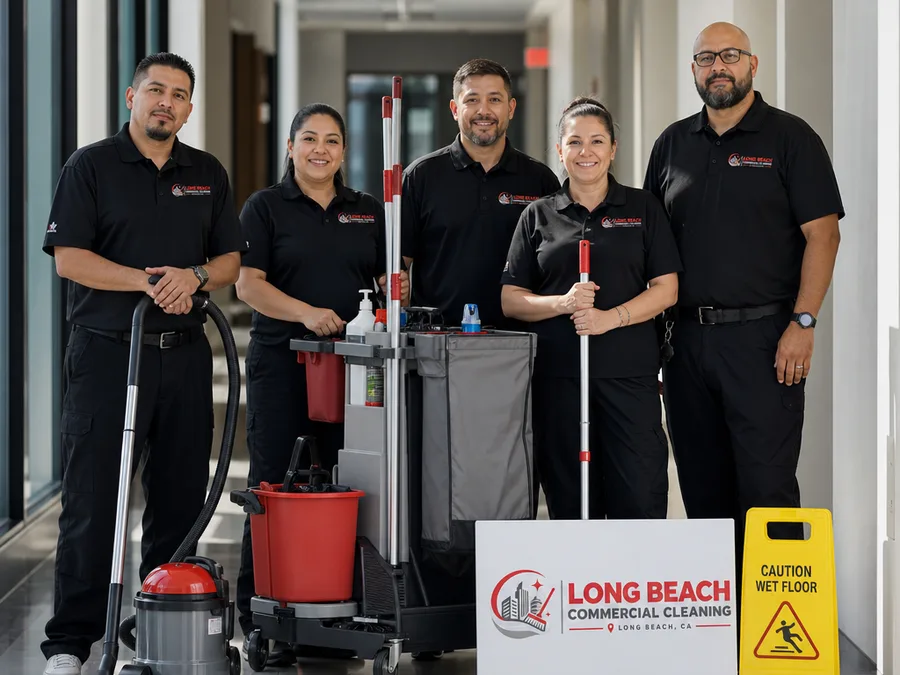
School & Daycare Cleaning · Long Beach
Support cleaner classrooms, shared rooms, restrooms, and entry areas with a plan built around active daily use. School and daycare cleaning is organized by room purpose, access windows, and supply routines.
LEARNING-SPACE ROUTINES
Classrooms can collect paper debris, fingerprints, tracked-in soil, and everyday clutter across many small surfaces. Across learning spaces, the recurring scope identifies accessible touchpoints, floors, waste, and other agreed tasks without making a vague promise about the whole room.
Shared rooms need priorities that reflect how they change throughout the day. Tables, handles, sinks, floor transitions, and waste containers can be assigned to the right cadence after the walkthrough.
Restrooms require a written routine for fixtures, dispensers, mirrors, floors, and supplies. The plan also confirms where items are stored and who handles ordering when stock runs low.
Entries and staff areas have different traffic patterns from classrooms. Separating them in the scope gives each space the attention it needs without blending every room into one generic checklist.
Request a CallbackROOM-BY-ROOM PRIORITIES
Schools and daycare facilities bring together rooms with different patterns of contact, storage, and daily activity. A useful plan recognizes the difference between a classroom, a restroom, an entry, and a staff support space.
Accessible surfaces, waste, floors, sinks, and door touchpoints can be listed by classroom type. The plan clarifies what happens on each visit and what is placed on a separate periodic schedule.
Multipurpose areas, halls, and common rooms can be organized around their use and access windows. The scope accounts for furniture, traffic, and the time available for service.
Fixtures, dispensers, mirrors, waste, and floors are assigned to an agreed frequency. Supply storage and restocking procedures are reviewed before the service begins.
Door glass, handles, mats, and nearby floors receive attention based on arrival patterns and visible soil. The plan can prioritize these areas for the opening or end-of-day window.
Break areas, offices, and staff restrooms are treated as their own zones. That makes it easier to balance employee needs with the rooms used throughout the day.
ACCESS AFTER THE DAY
School and daycare cleaning is built around the use of classrooms, shared rooms, and support spaces. Janitorial Services can provide the wider recurring structure for routine waste, restrooms, common areas, and basic floors.
Deep Cleaning Services is useful when the facility needs detailed work on buildup or neglected areas before a maintenance plan begins. It is not a replacement for the repeated classroom and restroom tasks on a school schedule.
Across learning spaces, floor Care Services may be appropriate when hard surfaces or carpeted traffic areas need a method beyond regular vacuuming and mopping. That specialized work is scoped separately.
Across learning spaces, window Cleaning Services can address glass that needs dedicated attention beyond routine entry touch-ups. Access and timing are discussed apart from the school cleaning checklist.
Request a Callback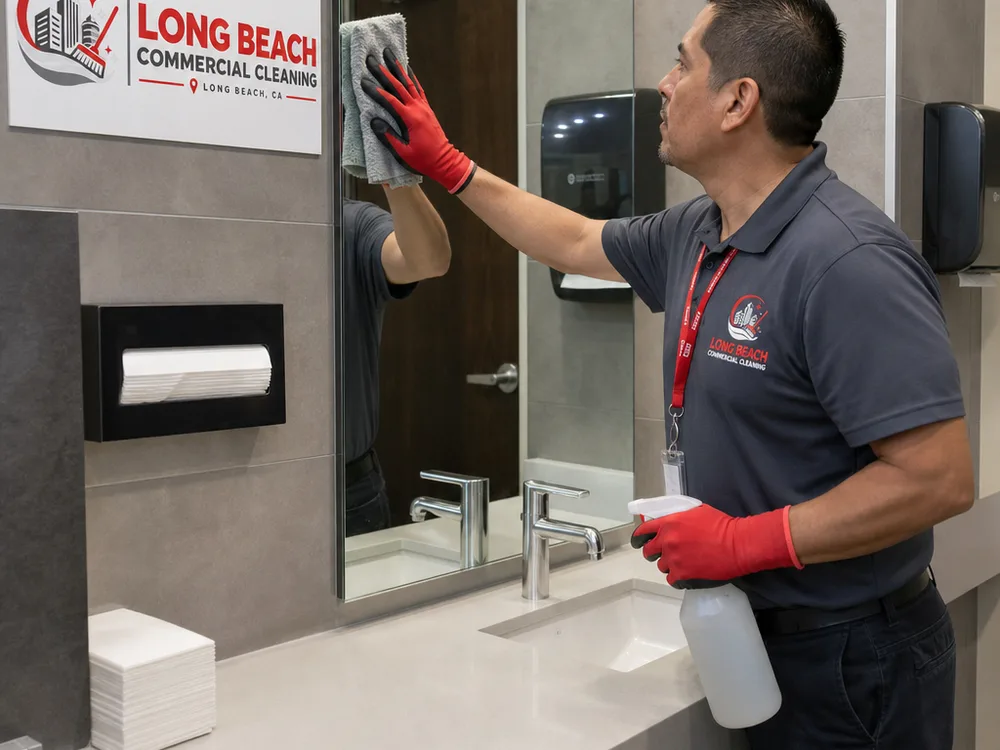
ACCESS AFTER THE DAY PROCESS
The work is easier to manage when each room has defined tasks and a workable service period. Planning around the daily schedule keeps cleaning from competing with the people using the building.
Request a CallbackThe initial walk-through notes arrival periods, room use, staff activity, and the windows when cleaning can be completed. That information shapes the schedule more reliably than a generic frequency.
Classrooms, shared spaces, restrooms, entries, and staff areas are documented as separate zones. Each zone receives tasks suited to its actual use.
The plan records cleaning supplies, storage locations, keys or access steps, and the person to contact if conditions change. Those details help each visit begin smoothly.
Service is placed during the agreed period with room priorities set in advance. The written checklist gives managers a clear way to see the work included.
Enrollment patterns, room use, events, and operating schedules can change the workload. Reviewing the scope keeps the plan current without assuming yesterday's routine still fits.
SCHOOL AND DAYCARE PRICING
Light recurring cleaning for a smaller school or daycare facility may typically run about $200 to $900+ each month. A larger facility, more frequent visits, or a broader room list can place the program around $1,200 to $4,500+ per month, depending on scope.
A per-visit estimate may use roughly $0.10 to $0.25 per square foot when the work is recurring. Room count, restroom use, floor material, access period, and supply handling all need a walkthrough before the written price is set.
Request a CallbackSCHOOL CLEANING QUESTIONS
The work is easier to manage when each room has defined tasks and a workable service period. Planning around the daily schedule keeps cleaning from competing with the people using the building. Across learning spaces, the questions below explain how the scope is formed before work is scheduled.
Classrooms, shared rooms, restrooms, halls, entries, staff spaces, and accessible offices can be listed as separate zones. Across learning spaces, the walkthrough identifies the tasks and frequency for each one.
The right time depends on the daily schedule, entry procedures, room use, and the areas included. Across learning spaces, service is planned for an agreed window that gives the crew appropriate access.
The planning discussion identifies which products are stored on site, where they are kept, and who replenishes them. That avoids unclear expectations around consumables during recurring work.
Restrooms usually have their own fixture, floor, and supply needs, so they are listed separately. Across learning spaces, their frequency is based on use patterns and the condition managers need to maintain.
Size, room types, cleaning frequency, restroom volume, floor condition, access hours, and the tasks included all affect cost. A walkthrough turns those details into a written scope.
Across learning spaces, a deep-cleaning project can establish a baseline in areas with buildup or neglected detail work. Recurring school cleaning then maintains the rooms on an agreed schedule.
BUILD A PRACTICAL ROUTINE
Share your term calendar, the rooms that need daily attention, and the sign-in procedure for anyone working on site. We walk the building and return a written scope.
Request a quote
Send the building type, the rooms involved, and your access window. We reply with a written scope and the price.